
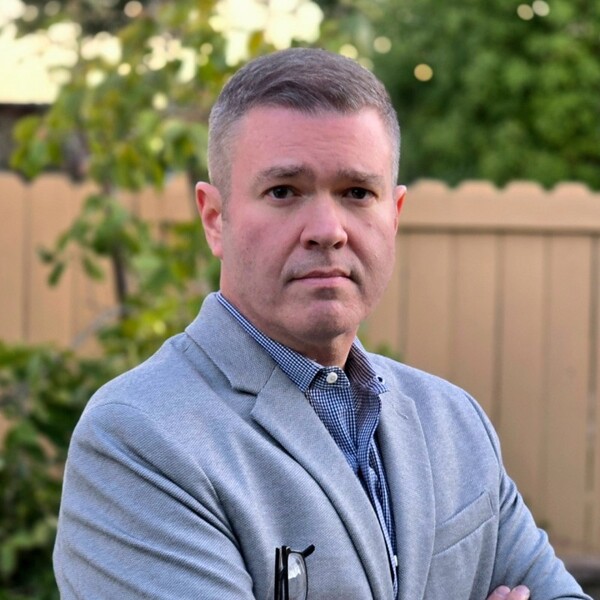
What do you do as the Head of Early Pipeline Oncology, Global Patient Safety at AbbVie? What is your day-to-day like in your role?
In short, I lead the team of talented safety physicians that support our programs in oncology early development. At this stage in my career, my day-to-day looks a bit different than a safety physician working as part of a development team. My job is primarily to drive the safety strategy for products by understanding the complexities of the treatment landscapes, goals of patients, physicians, and caregivers, and the strategic goals of the company. Another important part of my job is to function as a coach and mentor for the folks on my team, ensuring they grow in their knowledge and career goals as well. So much of my day is spent in meetings with senior level stakeholders across multiple functions, reading about the current treatment and regulatory landscape, and 1:1 meetings with my team members.
Your readers may be more interested in what the day-to-day for a safety physician working as part of a development team looks like though. To answer this, I will provide a general overview of what early development looks like, but below in the second question I will address the larger role of a safety physician across the lifecycle.
Clinical development progresses in phases where phase I studies are generally the first time a molecule is tested in humans. As you can imagine, this requires a lot of focus on the pharmacologic, biologic, and toxicologic aspects of a given molecule. Patient safety is the focus of phase I studies, so drug safety physicians are critical in working closely with our preclinical and clinical colleagues to understand and translate data to ensure that when new drugs are delivered to humans, that we are monitoring, mitigating, and managing any toxicities appropriately and that we are gathering the right data to ensure the safety profile of the drugs can be characterized to enable continual assessment of the benefit-risk balance for patients.
Safety physicians in early development need to understand the preclinical pharmacology and toxicology data, the mechanism of action of the drug, and any existing literature for similar mechanisms of action in order to build an anticipated safety profile. They spend time writing applicable sections of the phase I protocol, Investigator Brochure, briefing books for meetings with regulatory agencies, etc. They serve as part of the development team meeting regularly with other functional representatives including clinical development physicians and scientists, regulatory scientists, statisticians, clinical pharmacologists, and others, but a key function is working closely with safety scientists to continually monitor the emerging safety data for signals. This translates to a lot of time meeting with stakeholders, reading scientific papers to understand the science of the disease being studied and the mechanism of the drug, writing safety sections of documents, and reviewing clinical trial data.
For physicians unfamiliar with industry, how would you explain the role of a safety physician — and how would you differentiate drug safety
from pharmacovigilance
?
I will start with the latter portion of your question. Historically, pharmacovigilance
(PV for short) is a term that grew out of the need to ensure that the benefit-risk of all pharmaceuticals continued to be monitored even after initial approval. As such, technically this refers to the science of detecting, assessing, understanding, and preventing adverse reactions in marketed drugs. This was distinct from the safety activities and monitoring during clinical development before marketing approval; however, over the last several decades these terms have become synonymous.
Drug safety/PV is a function that spans the entire lifecycle of a drug – from lead optimization/selection through development and first marketing approval all the way through to established products that in some cases have been on the market for decades. The primary remit of drug safety/PV is to ensure regulatory reporting of safety data (e.g. individual case safety reports, aggregate reports, etc.) is done in a compliant manner, that a robust surveillance apparatus is in place to review internal safety data as well as relevant external and literature reports to detect and assess new signals, and to continually assess the benefit-risk balance of the drug.
The skillsets needed of physicians working in drug safety/PV can vary depending on the stage of development you work in, but generally speaking physicians with deep clinical experience and familiarity with data review will do well in drug safety/PV.
You've worked across clinical pharmacology, safety science, early development, and leadership roles. How did you first transition from clinical practice into industry?
My transition may have been a bit more natural than some. I did my residency in internal medicine and then a fellowship in clinical pharmacology, which for physicians generally means I did a fellowship in how to run phase I studies. After completing my fellowship, I did work as a clinical development lead and medical monitor for infectious disease products (small molecules and vaccines), but also worked as a phase I investigator over a period of several years. This gave me a lot of familiarity and experience reading protocols and investigator brochures, becoming familiar with IRBs and Code of Federal Regulations on protections of human subjects in research, as well as regulatory science.
At the same time, I was able to keep up my internal medicine practice by continuing to see patients as an outpatient primary care physician in a clinic once a week. I did this for about 6 years after my fellowship until I was ready to move completely to the Sponsor side in industry. I think given my experience, this transition was a bit easier than it tends to be – especially these days – for physicians without extensive development/research experience breaking into industry.
That said, I still landed my first role through networking. I was attending an American Society of Clinical Pharmacology and Therapeutics meeting in Washington, DC around the time I was planning to move to industry, and I happened to be looking at a poster with someone who ended up having a lot of connections. We got to talking and I mentioned my background in vaccines and given cancer immunotherapy being a hot area of development, he introduced me to several folks at the conference from a few different companies. I kept in touch the next few months, kept the conversation going, and eventually landed a few interviews which translated to offers. I accepted an offer in the Clinical Pharmacology group at Genentech.
The whole process from meeting the connection at the ASCPT conference to starting my job was about 8 months, so even in the best of circumstances, patience is key.
I worked in clin pharm for about a year and a half before transferring over to the drug safety/PV group. I absolutely loved my time in clin pharm, but in industry, a lot of the medical aspects of clin pharm – for which I was trained – are primarily outsourced to Contract Research Organizations (CROs). Working exclusively in clin pharm on the Sponsor side at a company that did not maintain their own phase I unit, I missed the close connection to the medical side and thus was drawn to drug safety/PV.
What parts of your experience — internal medicine, Army leadership, Walter Reed clinical trials, clinical pharmacology — turned out to be the most transferable to drug safety and development work?
I don't think there is one answer here. All of my experiences shaped me into the drug development professional and leader I am today.
- Internal medicine provided me with a very broad perspective of disease experience, reviewing lab data, and holistic understanding of patient experiences.
- My time in the Army provided me great leadership training and experiences earlier in my career than I think tends to happen in civilian organizations.
- My experiences across clinical trials and clinical pharmacology provided me a deeper understanding of the regulatory landscape, requirements, and processes of running clinical trials, managing and interpreting data, and communicating.
All of it has served me very well in drug safety/PV, but I also recognize I still have so much more to learn. Drug development is constantly evolving and as technology improves we need to be able to adapt as well, so maybe ultimately what has helped me the most across my career has been that I have become resilient and can adapt well to change.
As physicians, we tend to have our careers planned out – undergrad, medical school, residency, (maybe fellowship), attending practice – and veering from this trajectory is scary. Having taken a great jump several times in the past 10-15 years, whether it be leaving clinical practice, leaving the Army, changing from clin pharm to drug safety/PV, leaving Genentech for AbbVie, etc. I have learned how to adapt to change, learn from it, and be excited about it. I think this has ultimately served me the best.
Many physicians are curious about drug safety and pharmacovigilance but don't know where to begin. What's the best first step for someone testing the waters?
I think if you are at the testing the waters
stage, your best bet is to network with as many folks in drug safety/PV as you can. Jump on LinkedIn and search for anyone in drug safety or PV and connect. Maybe 3 out of 10 will actually respond, but that's fine. I usually try and respond, so feel free to reach out to me. Have intro calls with them to learn more about their experiences. My experiences are just my own and while drug safety/PV is a highly regulated field and tends to be pretty similar across industry, we all have different experiences and insights. This is probably the best activity for folks testing the waters.
There doesn't tend to be a lot of part time or consultant type work in this field for folks without extensive industry experience already, so unfortunately you won't really get direct experience unless you land a role. If you happen to be at a large academic center, you could gain experience by working on clinical trials or looking at joining your center's IRB (if you have one) or office of human subjects protections. These tend to be more part time and may provide you with the ability to continue to practice clinically while still getting experience with some aspects of product development and regulatory science.
What are the most common misconceptions physicians have about drug safety — and about the pharmaceutical industry more broadly?
I like this question because there are many 😊 I'll keep it simple and provide two of the biggest ones I see – one for drug safety/PV and one for pharma in general.
Misconception #1: Drug Safety is for Introverts Who Want to Work Alone
I have seen several discussions suggesting that drug safety/PV tends to attract introverts and folks who just want to sit in an office or work remotely and just look at data all day and rarely interact with others. While introverts can absolutely excel in drug safety/PV, this vision is NOT how to be successful and if you land a role expecting this to be your day-to-day, you will be unhappy. While you do need to like to review data and assess trends, etc. you also need to be able to communicate findings meaningfully to a variable audience. You need to have good interpersonal and soft
skills to really succeed.
Misconception #2: Pharma is an Easy Way to Wind Down Your Career
Another misconception I often see about pharma in general, is that the work is very easy and is a great way to sort of wind down
a career and sail off into the sunset. While I would agree the work/life balance is better than many clinical jobs, we still work very hard. If you are pursuing pharma roles because you want to work 30-40 hrs per week, you might end up being unhappy. Again, I still think the work/life balance is better. I am able to enjoy dinners with family/friends, vacations, time to relax, etc. but I have also had times where I have worked through the weekend or late into the night or needed to jump on a 6am call.
When physicians transition into safety or medical affairs roles, do most make the switch easily, or do they benefit from mentorship and guidance? If so, what type of mentorship is most helpful?
Just a quick caveat up front – I have never worked in medical affairs, so I cannot comment on that. However, for drug safety/PV roles, I think any physician who comes into the role bringing with them a desire to learn and a humility that they are part of an extensive team of folks with a lot of varied expertise and they may not be the smartest person in the room
anymore, will do well.
Benefitting from mentorship and guidance though is a separate question. We all – no matter where you are in your career – benefit from mentorship and guidance. You will need a lot of it when first entering industry, but it doesn't stop once you reach a certain level. I have many mentors and still seek guidance a lot!
When I first joined industry, I had a mentor tell me that working in industry will feel like medical training all over again:
- Your first 6 months to a year you will feel like an intern – primarily focused on learning what everything means and what everyone does.
- The next 2-3 years will be like being a resident – you'll start to feel a bit more comfortable and have
phone a friends
but you will still feel like you're not ready to be on your own. - After about 3-4 years or so, you'll feel like an attending – confident that you can handle most things, but still need to jump on Up To Date or crack open a text book for complicated cases, or reach out to more senior attendings for advice from time to time.
For me, this advice has proven to be spot-on.
How does compensation for safety and early development roles generally compare to compensation for clinical physician roles? What should physicians realistically expect?
Yeah, this question comes up a lot. Unfortunately there is no one answer, it really depends on so many factors including what your clinical compensation is (e.g. a pediatrician vs. an internist vs. an anesthesiologist vs. radiologist vs. neurosurgeon) and what your role/level in industry is (e.g. an associate medical director vs. senior medical director vs. a department head or vice president).
Generally speaking though, most physicians if they are earning around $300k or so, can probably expect a similar compensation upon entering pharma.
One important concept though is that compensation is generally a mix of:
- Base salary
- Short term performance bonus
- Long term incentive (i.e. stock grants/options)
What folks might see reported on a job posting is only the base salary as many states are now required to post this information. But the performance bonus and stock can be a very significant portion of compensation after a while as well, so this must be considered carefully.
This takes time though, especially the stock grants as they tend to vest over a certain number of years (usually 3-4 years). So while the first year you may only be taking home the base salary, the following year you'll likely start getting merit increases and a performance bonus that will be a percentage of your base depending on your level and can be enhanced by your performance if you do well, and then 3 or 4 years after that your stock will start entering a vesting cycle.
All of this can significantly increase your total compensation (sometimes 2X your base or more). In addition, promotions lead to increases in base salary as well, and the higher up you go, the more likely it will be that clinical compensation may be replaced or surpassed no matter what your training is in.
Quick Hits
A habit that's had an outsized impact on your effectiveness as a leader?
Not sure if it's a habit, but empathy. I think approaching leadership with empathy has served me very well.
One skill you didn't realize would matter early in your career — but now use every day?
I've always been a voracious reader and this has been very helpful.
A small decision that ended up shaping your career more than you expected?
It's a toss-up between listening to my IM program director when he suggested pursuing clinical pharmacology fellowship given my interest in research, or deciding to attend the ASCPT meeting in 2017 😊
One word you'd use to describe the future of physician leadership in biotech?
Innovative – if you can't be open minded to innovation, you won't be successful as a leader in pharma/biotech.
Disclaimer: the views and opinions expressed in this interview are solely those of the author and reflect his personal experiences. They do not represent the positions of any of his employers, past or present.